Dry ice is one of the most efficient cooling agents used across the food, pharmaceutical, medical and logistics industries in the UAE. It keeps products frozen for longer, does not leave any liquid residue, and is widely used for shipping, event effects and industrial cleaning. But dry ice is not like a regular block of ice. It sits at a temperature of around minus 78.5 degrees Celsius, which means handling it and storing it the wrong way can lead to burns, pressure buildup or product spoilage.
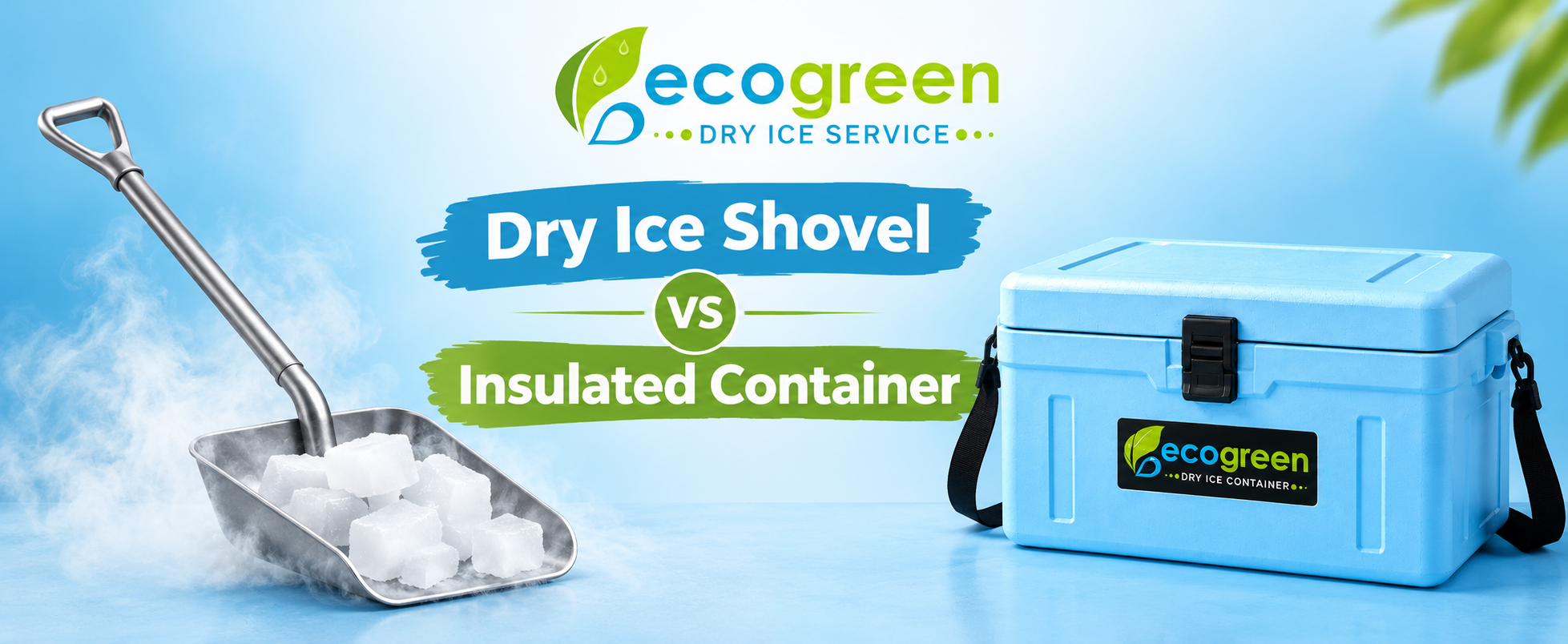
This is where two essential tools come in: a proper dry ice shovel for safe handling, and a reliable insulated dry ice container for storage. Businesses that invest in both are able to reduce sublimation loss, protect their staff, and maintain a consistent cold chain from the moment dry ice is produced to the moment it reaches its final destination.
In this guide, we will break down why these two products work best together, what to look for before buying, and how UAE businesses, especially those based in Abu Dhabi, can build a safer and more efficient dry ice workflow.
Why Dry Ice Handling Requires the Right Tools
Many businesses assume that any scoop or gloved hand is enough to move dry ice around. In reality, poor dry ice handling is one of the most common causes of workplace injuries in cold chain and food processing environments. Direct skin contact with dry ice for even a few seconds can cause frostbite, and using the wrong container can lead to pressure buildup, since dry ice constantly releases carbon dioxide gas as it sublimates.
Proper handling protocols typically include:
- Using insulated tools, never bare hands or metal utensils that conduct cold rapidly
- Working in ventilated areas since dry ice releases CO2 as it sublimates
- Wearing cryogenic gloves and eye protection during transfer
- Never storing dry ice in fully airtight containers without any pressure release
- Using purpose built tools designed for the density and shape of dry ice pellets or blocks
Following these steps consistently is what separates a safe operation from one that is exposed to daily risk. This is exactly why a dedicated shovel and a properly designed container are not optional extras. They are the baseline requirement for any business that works with dry ice regularly.
The Role of a Dry Ice Shovel
A standard shovel or spoon is not built to handle the density and coldness of dry ice pellets or shaved dry ice. A dedicated dry ice shovel is designed with an insulated handle and a scoop shape that allows workers to transfer dry ice quickly and safely from storage into shipping boxes, coolers or production lines.
Key benefits of using a dedicated dry ice shovel include:
Reduced exposure time. Workers spend less time in direct proximity to extreme cold, which lowers the risk of frostbite and cold burns.
Faster loading and packing. A shovel designed specifically for dry ice pellets or blocks moves product more efficiently than improvised tools, which matters in high volume packing environments like seafood export, pharma distribution, and ice cream logistics.
Better portion control. Consistent scoop sizes make it easier to measure out the right amount of dry ice per shipment, which helps control both safety and cost.
Lower risk of contamination. Using a dedicated tool rather than a shared or repurposed utensil reduces the chance of cross contamination in food and pharmaceutical settings.
For businesses in the capital, a dry ice shovel in Abu Dhabi is often paired with other handling accessories like cryogenic gloves and aprons to build a complete safety kit for warehouse and packing teams.
Why Insulated Dry Ice Containers Matter
Once dry ice is safely handled, the next challenge is keeping it at the right temperature for as long as possible. Dry ice sublimates naturally, meaning it slowly turns from solid to gas even when left untouched. Without proper insulation, this process speeds up dramatically, leading to product loss and wasted cost.
An insulated dry ice container is built with thick, high density insulation designed specifically to slow this sublimation rate. Unlike a regular cooler box, these containers are engineered to hold extremely low temperatures for extended periods, which makes them ideal for:
- Long distance transport of frozen or temperature sensitive goods
- Overnight or multi day storage of dry ice before use
- Medical and pharmaceutical cold chain logistics
- Food and beverage delivery across the UAE and GCC region
- Laboratories and research facilities that need stable low temperature storage
A well designed dry ice storage container also includes a small vent or pressure release feature, since sealing dry ice completely airtight can cause dangerous pressure buildup as it releases CO2 gas. This detail is one of the biggest differences between a purpose built container and a generic insulated box.
For companies operating out of the capital, sourcing an insulated dry ice container in Abu Dhabi locally also means faster delivery, easier replacement of parts, and support that understands the region’s climate and logistics demands.
How the Shovel and Container Work Together
Think of these two products as the beginning and end of a safe dry ice workflow. The shovel is used at the point of transfer, when dry ice is being moved from a bulk supply into a smaller container, packing box or production area. The insulated container is used at the point of storage and transport, keeping that dry ice cold and stable until it is needed.
Using them together creates a cycle that protects both people and product:
- Dry ice is safely scooped using an insulated shovel, avoiding direct contact and minimizing exposure time.
- It is transferred into an insulated storage container designed to slow sublimation and maintain temperature.
- The container is transported or stored until the dry ice is needed for packing, shipping or use.
- The shovel is used again to portion out dry ice as required, keeping the process consistent and repeatable.
Businesses that skip one half of this process often end up compensating with higher dry ice usage, more frequent reordering, or increased safety incidents. Investing in both tools from the start is a simple way to reduce long term operating costs.
Common Mistakes to Avoid
Even experienced teams can fall into a few common traps when it comes to dry ice handling and storage.
Using metal scoops or containers. Metal conducts cold extremely fast and can cause burns on contact, and it does not offer any insulation benefit.
Sealing containers completely airtight. This can cause pressure to build up dangerously as the dry ice releases gas, so a proper container always allows for some ventilation.
Storing dry ice in small, unventilated rooms. As dry ice sublimates, it releases carbon dioxide, which can lower oxygen levels in a small enclosed space. Good ventilation is essential wherever dry ice is stored in volume.
Reusing packaging not designed for dry ice. Regular foam boxes or plastic bins degrade quickly and do not maintain the internal temperature needed to slow sublimation effectively.
Skipping protective gear. Even with the right shovel, gloves and eye protection should always be worn, since splashing or accidental contact can still occur during transfer.
Choosing the Right Products for Your Business
When selecting a dry ice shovel and insulated container, consider your daily volume, transport distance, and the sensitivity of the products you are cooling. A small cafe using dry ice occasionally for beverage service has very different needs compared to a pharmaceutical distributor shipping temperature sensitive vaccines across the region.
Look for shovels with insulated, non slip handles and container edges. For containers, prioritize thickness of insulation, presence of a pressure release vent, and overall durability for repeated use. Businesses across Abu Dhabi and the wider UAE increasingly prefer suppliers who can provide both products together, since it simplifies procurement and ensures compatibility across the entire cold chain process.
Final Thoughts
Safe and efficient dry ice handling comes down to having the right tools at every stage. A dedicated dry ice shovel protects your team during transfer, while an insulated dry ice container protects your product during storage and transport. Together, they form the foundation of a reliable cold chain, whether you are running a food business, a pharmaceutical operation, or a logistics company anywhere in the UAE.
If your business is looking to upgrade its dry ice handling process, explore our range of dry ice handling tools and insulated dry ice storage containers built specifically for the demands of the UAE market.